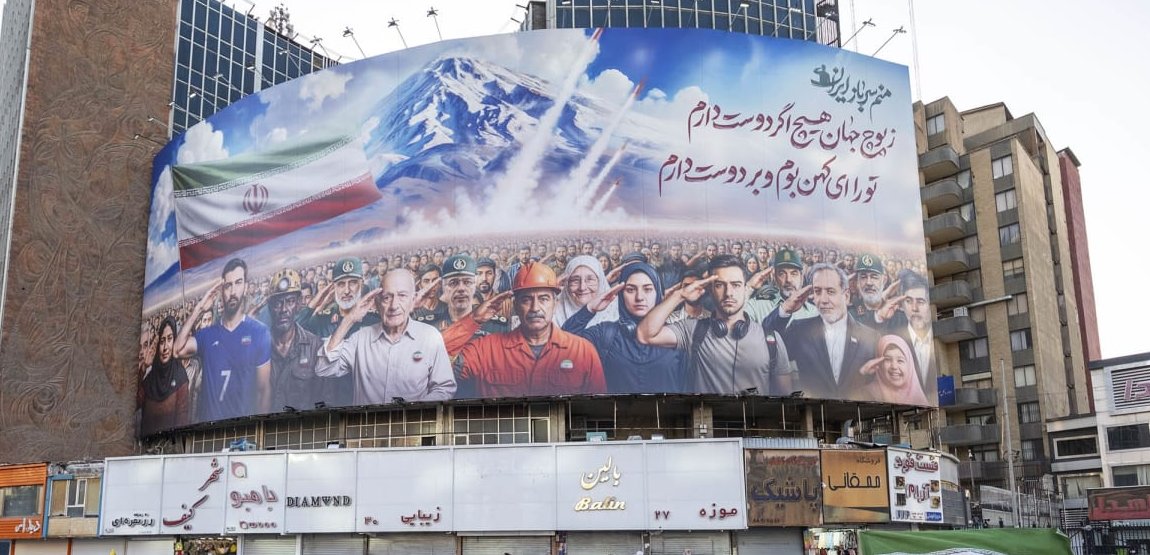
Iran News: Iran has once again used public art as a powerful political message. Large murals have appeared in Tehran warning of retaliation against the United States following threats from former US President Donald Trump. These murals, prominently displayed in busy areas like Enghelab Square, feature striking imagery, including damaged American warplanes and a US aircraft carrier under attack.
Accompanying these visuals are stern warning phrases indicating that any military aggression against Iran will be met with a response. The timing of these murals is significant. They appeared after Trump publicly spoke about the potential use of military force and the deployment of US naval assets to the Middle East—comments that were widely reported and closely watched in Iran.
For Iran, these murals are not simply street art. They are a long-standing tool for political messaging, often used to convey the state’s position to both its citizens and the outside world. By placing these images in highly visible public spaces, Iranian authorities aim to send a clear signal: Iran is prepared to defend itself if threatened.
These murals represent a broader strategy of deterrence, where visual symbolism is used to project strength without direct military action. They also serve a domestic audience, reinforcing a sense of resistance and national unity at a time when the country faces economic pressure, sanctions, and internal challenges.
The mention of retaliation is particularly significant given the tense history between Iran and the United States. Relations have been hostile for decades, marked by sanctions, proxy conflicts, and intermittent military threats. Trump’s past actions, including withdrawing from the Iran nuclear deal and the 2020 assassination of Iranian General Qassem Soleimani, remain fresh in the minds of Iranian leaders and the public.
Consequently, even indirect or conditional threats from Trump continue to provoke strong reactions in Tehran. These murals can be seen as part of this ongoing exchange of warnings, where words, images, and military posturing take the place of direct confrontation.
Internationally, these murals heighten concerns about rising tensions in the region. The stability of the Middle East is already fragile, due to conflicts in neighboring areas and increased military activity by global powers. Such messages fuel fears that miscalculation or escalation could have serious consequences.
At the same time, Iran appears to be carefully framing its message as defensive rather than aggressive, emphasizing retaliation rather than initiating conflict. This distinction allows Iranian leaders to project strength while also maintaining that they do not want war. Overall, the unveiling of these murals demonstrates the serious political significance that symbolic acts can carry.
Through images and short, powerful messages, Iran is responding to perceived threats and reminding the US of the potential costs of confrontation. While immediate military action may not follow, such displays indicate that tensions remain high and that both sides are communicating through warnings rather than dialogue.
1 thought on “Iran unveils murals warning of retaliation against US after Trump threats”